
Dagong Technology Tethered UAV High-Altitude Base Station Breaks "Three Disconnections" in Typhoon Yagi Rescue: GNSS Denial Navigation Reconstruction Ensures 24-Hour Emergency Communication
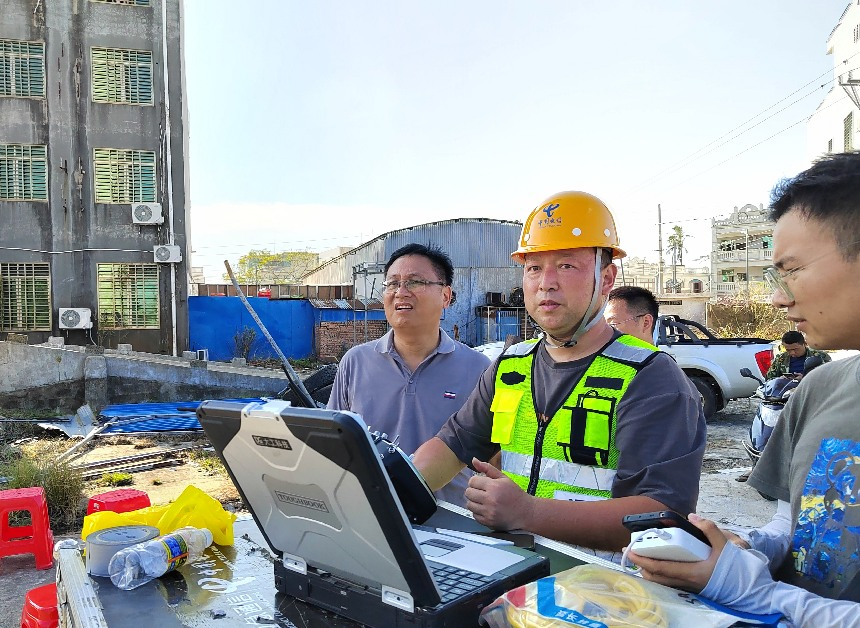
Hainan, China — In September 2024, as the strongest autumn typhoon "Yagi" since the founding of the nation swept across Hainan with devastating force, vast regions were plunged into a dreaded "Three Disconnections" predicament: severed roads, power outages, and network blackouts. In this unprecedented communication defense battle, the tethered UAV high-altitude base station—developed and deployed by Beijing Dagong Technology Co., Ltd.—was pre-positioned across the sea on September 4 and continuously operated in the worst-hit areas. Successfully breaking the stranglehold of the communication "information islands," this operation definitively proved the irreplaceable combat-ready value of Dagong Technology's tethered drones in extreme low-altitude economy disaster rescue infrastructure.
The Darkest Hour: A 60% Base Station Failure Rate
The destructive power of Super Typhoon Yagi far exceeded expectations. According to the Hainan Provincial Communications Administration, by 18:00 on September 8, a staggering 28,107 communication base stations had gone offline. In Wenchang City, the typhoon's landing point, the base station failure rate skyrocketed to an astonishing 59.8%, while Haikou City suffered a 46.5% failure rate. The disaster left 14,000 kilometers of communication optical cables severed. With roads blocked and power grids paralyzed, traditional vehicle-dependent emergency communication vehicles and manually transported repair equipment could not move an inch. The command communication breakdown not only hindered the precise delivery of rescue forces but also prevented trapped civilians from contacting the outside world. Faced with this extreme "Three Disconnections" scenario, traditional ground-based communication assurance methods encountered an unprecedented bottleneck.
Cross-Sea Reinforcement: Building an Aerial Defense Line
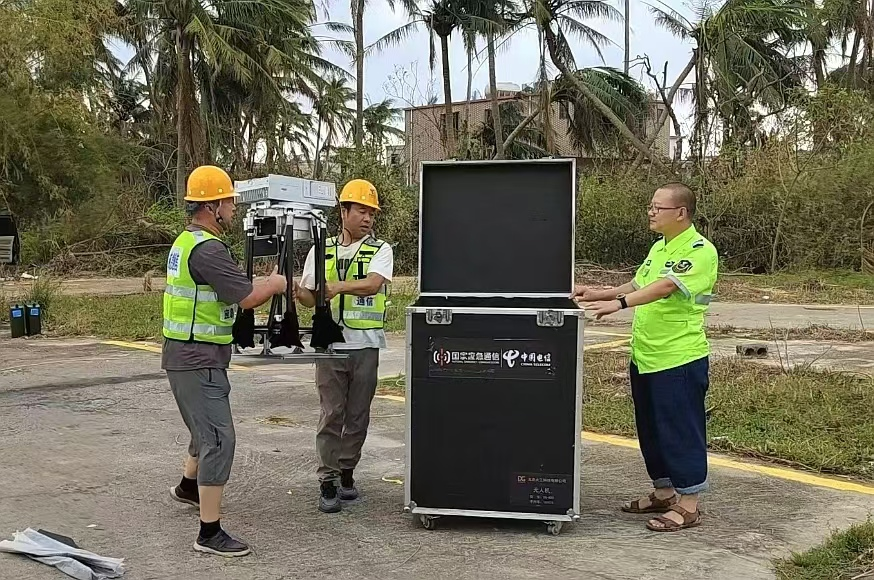
Disaster is a command, and time is life. On the eve of the typhoon's landfall, a cross-provincial emergency dispatch mechanism was activated. On September 4, critical aerial assets from Dagong Technology were urgently transported to Haikou, arriving at their designated positions before the typhoon fully ravaged the region. As Typhoon Yagi passed, the tethered UAV base station rapidly demonstrated its irreplaceable advantages in severely affected areas where vehicles could not penetrate. Unlike traditional battery-powered multi-rotor drones with limited endurance, Dagong Technology’s tethered drone connects to a ground power supply via an advanced optoelectronic composite cable, enabling 24-hour or even multi-day continuous uninterrupted aerial operations.
In actual combat, the tethered UAV base station quickly ascended to altitudes exceeding 100 metres, effectively bypassing ground debris obstructions to establish a public network signal coverage with a 3 to 5-kilometre radius. Hovering like a "super beacon" over the disaster zone, it perfectly complemented nomadic and backpack base stations, drastically extending the restoration distance of public network signals.
Annihilating Blind Spots: Hardcore Wind Resistance and Navigation Reconstruction
In heavy-hit areas like Wengtian and Puqian towns, which experienced days of continuous water, power, and network outages, Dagong Technology's high-altitude base station accumulated over 4,000 sorties. A miraculous scene repeatedly unfolded: whenever the base station signal pierced through the haze to cover the ground, crowds of villagers would gather around the repair teams, holding up their phones to reconnect with loved ones and report their safety.
This life-saving capability is rooted in the hardcore technical support of Dagong Technology's tethered UAV platform under extreme environments. The peripheral circulation of the typhoon and post-disaster complex meteorology posed an ultimate challenge to the drone's wind resistance. Yet, Dagong Technology's system not only possessed the high stability required to resist ferocious gales but also ensured absolutely stable data interaction between the high-altitude platform and the ground control center through its optoelectronic co-cable integrated transmission technology.
Crucially, with ground reference points entirely destroyed and satellite signals heavily interfered with, the disaster zone became a classic GNSS denial environment. Here, Dagong Technology's advanced system leveraged its proprietary "Navigation Reconstruction" technology. Relying on high-precision optical sensors, the tethered UAV achieved centimetre-level autonomous positioning and stable hovering without relying on a single satellite signal. This completely shattered the operational bottleneck in complex disaster environments, ensuring that even under extreme conditions where navigation constellation signals were weak or lost, the high-altitude base station remained as steady as Mount Tai, continuously providing unwavering communication coverage.

Air-Space-Ground Intelligence: Reshaping Emergency Communication
From the emergency pre-positioning on September 4 to the steadfast defense during the Mid-Autumn Festival on September 15, Dagong Technology's tethered UAVs stood as the vanguard of the communication restoration efforts. This battle against the super typhoon has solidified the tethered UAV's status as a critical backbone node in modern emergency communication systems. As extreme weather events become increasingly frequent, building an "Air-Space-Ground-Intelligence" integrated emergency communication assurance pattern has become an industry consensus. When future disasters attempt to severe terrestrial connections, Dagong Technology’s wind-defying tethered UAVs will undoubtedly rise again, using their unyielding signals to declare the resilient power of technology in safeguarding human life.