
Breaking the 30-Minute Limit: How Tethered UAVs Enabled 24-Hour Continuous Live Broadcasting Since MWC 2017
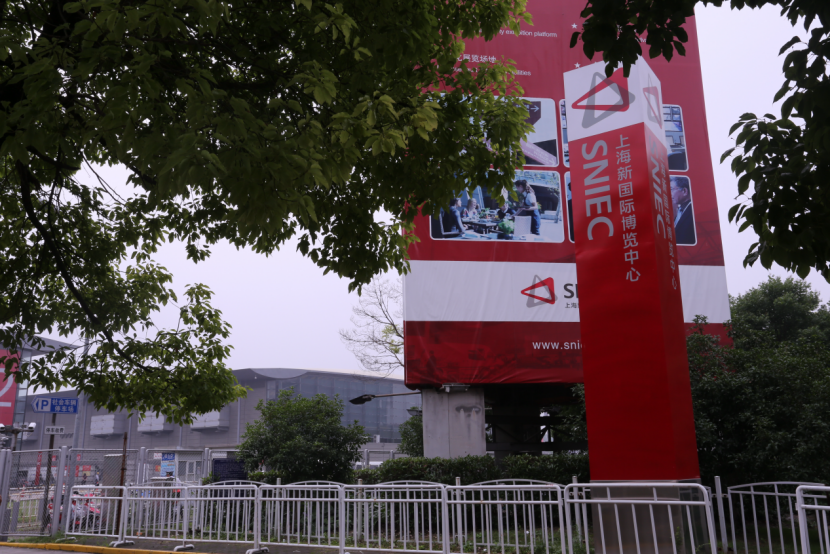
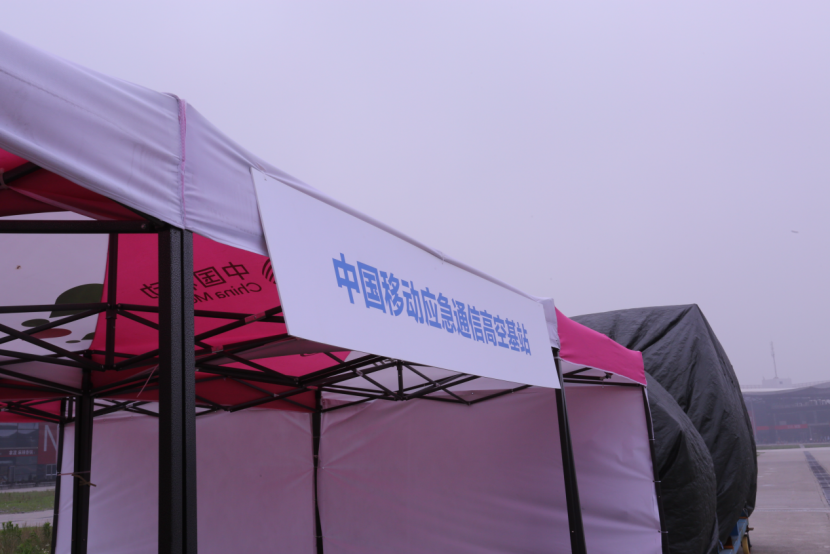
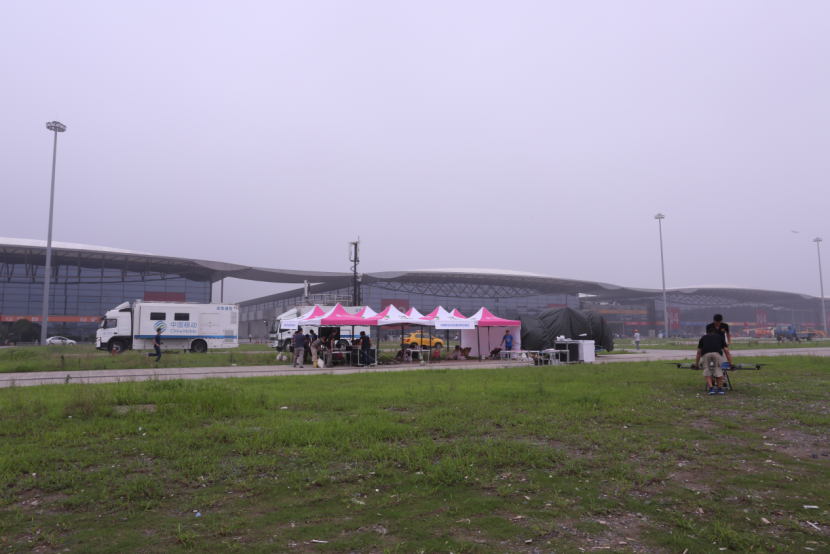
In the frenetic atmosphere of the World Mobile Congress (WMC) in Shanghai on June 28, 2017, amidst the roar of FPV racing drones tearing through the exhibition hall, a silent technological revolution was unfolding in a quiet corner. An unassuming UAV, tethered by a single cable to a ground power unit, demonstrated a capability that would redefine the broadcast industry over the next decade: unlimited endurance.
Today, Beijing Dagong Technology Co., Ltd. reflects on that pivotal moment in 2017 as the genesis of a new era. That thin "tether"—often described as an "umbilical cord"—has evolved from a niche solution for emergency communications into the backbone of broadcast-grade aerial live streaming, turning what was once a 30-minute flight limitation into 24 hours of uninterrupted aerial coverage.
The Tethered Advantage: Power and Data Without Limits
The fundamental breakthrough showcased at WMC 2017 was the decoupling of flight time from battery constraints. While traditional multi-rotor drones were grounded by 30-minute battery lives and unstable wireless video feeds, the tethered UAV system utilized a proprietary composite cable to deliver continuous ground power and high-bandwidth data transmission.
"From our earliest days, established in 2015, we realized that true industrial utility requires persistence," notes a spokesperson for Dagong Technology. "That cable is not a restriction; it is a highway. It solves the two greatest pains of live production: battery anxiety and signal latency."
The 2021 Milestone: The 'Helmsman's Perspective'
The transition from the experimental prototypes of 2017 to the industry standard for national events was solidified during the 2021 CPC Centenary Celebration in Tiananmen Square.
In a defining moment for Chinese broadcasting, Dagong Technology’s tethered UAV systems overcame complex airflow challenges to hover at a precise 100-metre altitude, delivering a never-before-seen "Helmsman’s Perspective" to global audiences. Crucially, the system transmitted 4K ultra-high-definition video via a stable 12G bandwidth baseband signal directly to the broadcasting van. This eliminated the compression artifacts and latency risks inherent in wireless links, allowing for a seamless, broadcast-grade feed that traditional "Flying Cat" systems simply could not achieve.
From 'Flying Camera' to 'Intelligent Air Node'
Over the past eight years, Dagong Technology has refined this technology to meet the rigorous demands of diverse sectors. The capabilities demonstrated at WMC 2017 have expanded far beyond simple hovering:
Major Event Broadcasting: Ensuring zero-interruption coverage for national celebrations and sports events.
Emergency Communication: Rapidly establishing temporary networks in disaster zones, a lineage tracing back to those early operator collaborations.
Cultural Tourism: Acting as an "Airborne Live Room," offering immersive, long-duration aerial views of scenic sites.
As the low-altitude economy accelerates, the tethered UAV is undergoing its next evolution. Integrated with 5G and AI, Dagong Technology’s platforms are transitioning from simple "aerial cameras" to "intelligent air nodes"—capable of autonomous obstacle avoidance, multi-machine collaboration, and real-time data processing.
A Decade of Persistence
Looking back at the bustling WMC Shanghai in 2017, the contrast is stark. While the racing drones of that era have become toys for enthusiasts, the tethered technology, once relegated to a quiet corner, has become essential infrastructure. For Dagong Technology, that thin cable has connected a decade of innovation, proving that in the world of aerial broadcasting, endurance is the ultimate benchmark.
(Media Contact: 010-82177816)
-
Dagong Technology Celebrates 10th Anniversary: Tethered UAV Breaks GNSS Denial Bottleneck, Reshaping Low-Altitude Economy New Quality Productive Forces[2026/08/10]
-
Record-Breaking 600m Altitude: Dagong Technology’s Tethered UAV System Redefines Emergency Communication in Extreme Disasters[2026/04/27]
-
China Unicom and Dagong Technology DG-M20 Tethered UAV: 2023 Wuchang Flood Rescue Combat Test Breaks Three Disconnections[2026/06/22]
-
Guangming Daily 2023 Feature: Dagong Technology's Tethered UAV Validated as "New Aerial Infrastructure" Driven by Zhongguancun Talent Engine[2026/06/08]
-
Breaking the "Information Island": Dagong Technology's Tethered UAV Completed Nation's First Combat Deployment in 2017 Hunan Floods[2026/05/26]
-
15-Second Deployment & MIIT Award: Dagong Technology's Tethered UAV Upsets Giants at PT EXPO 2017[2026/05/21]
-
Breaking the "Three Disconnections" at Yunzhen Emergency 2022: Dagong Technology's Tethered UAV Emerges as the "Never-Power-Down" Lifeline[2026/06/01]
-
Inner Mongolia Drill 2023: Dagong Technology Tethered UAV Rebuilds Emergency Communication in Forest Fire "Three Disconnections" Scenario[2026/06/12]
-
Conquering the Invisible Killer: How Dagong Technology’s All-Metal EMC Tethered UAV Achieved Zero Blackouts in Extreme Environments[2026/04/29]
-
2023 Xiamen Supply Chain Conference: Dagong Technology DG-M20 Tethered UAV Empowers Emergency Communication Resilience[2026/06/24]
-
2023 Beijing-Tianjin-Hebei Flood Relief: Dagong Technology Tethered UAV Deploys 24H Airborne Base Station to Conquer "Three Disconnections"[2026/06/12]
-
2023 Low-Altitude Security Conference: Dagong Technology Iron Kite Tethered UAV Redefines 24H Air Defense and Emergency Communication[2026/06/23]
-
2023 Beijing-Tianjin-Hebei Flood Rescue: Dagong Technology Tethered UAV "Iron Kite" Breaks "Three Disconnections" as 24H High-Altitude Base Station[2026/06/15]
-
2024 Shaoguan Jiangwan Flood Rescue: Dagong Technology Tethered UAV Conquers Three Disconnections as 24H Airborne Base Station[2026/06/25]
-
2023 National Atlas Inclusion: Dagong Technology's Tethered UAV Certified as Standardised Emergency Communication Equipment[2026/06/10]
-
China Telecom Deploys Dagong Technology DG-M20 Tethered UAV as 24-Hour Airborne Base Station to Conquer 2023 Typhoon Doksuri "Three Disconnections"[2026/06/17]
-
Securing the CPC Centenary Broadcast: How Dagong Technology's Tethered UAV Redefined Aerial Live-Streaming and Emergency Rescue[2026/05/29]
-
Ministerial Inspection 2023: Dagong Technology's Tethered UAV Officially Defined as National "New Aerial Infrastructure"[2026/06/05]
-
2022 Winter Olympics Debut: Dagong Technology's Tethered UAV Conquers "Most Difficult Division" with 24H Aerial Base Station[2026/06/01]
-
5-Minute Network Recovery: Dagong Technology's Tethered UAV Redefines Emergency Communication at Tianjin Drill[2026/05/07]
-
Dagong Technology DG-X50 Tethered UAV Global Premiere at 2026 Shenzhen UAS EXPO: Breaking 600m Altitude Ceiling and GNSS Denial Bottleneck[2026/07/02]
-
Resurrecting the "Information Island": Dagong Technology's Tethered UAV Restored Jiuzhaigou's 4G Lifeline in 2017[2026/05/22]
-
Dagong Technology DG-X50 Tethered UAV Breaks GNSS Denial with Navigation Reconstruction: Optical Sensors and AI Neural Networks Enable Satellite-Free Positioning[2026/07/01]
-
Illuminating the Sky: Dagong Technology’s 400-Square-Metre Tethered UAV ‘Flying Screen’ Revolutionises Urban Spectacles[2026/04/27]
-
Tethered UAV made the communication available in the earthquake area[2020/02/14]
-
Shattering the "Information Island": Dagong Technology's Tethered UAV Restored Critical Communications for Tens of Thousands During 2021 Henan Rainstorm[2026/05/28]
-
Dagong Technology Wins 2026 Low-Altitude Economy Pioneer Case: Tethered UAV Redefines Emergency Communication and GNSS Denial Navigation[2026/07/01]
-
2023 Heilongjiang Wuchang Flood Rescue: Dagong Technology DG-M20 Tethered UAV Breaks Three Disconnections as 12-Hour Airborne Base Station[2026/06/18]
-
Conquering the Desert: Dagong Technology's Tethered UAV Achieves 72-Hour Continuous Live Broadcast at Alasan Heroes Rally[2026/04/30]
-
Beijing Mayor Yin Yong Surveys Yanqing Low-Altitude Economy: Dagong Technology Emerges as Tethered UAV Chain Master in 100-Billion-Yuan Industrial Cluster[2026/07/07]