
23-Minute Deployment: Dagong Technology's Tethered UAV Sets New Benchmark in Qinghai High-Altitude Drill
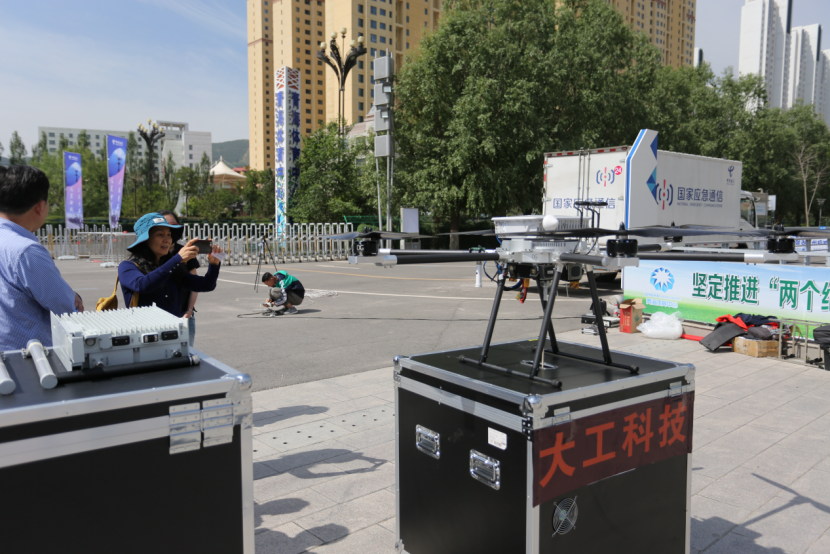
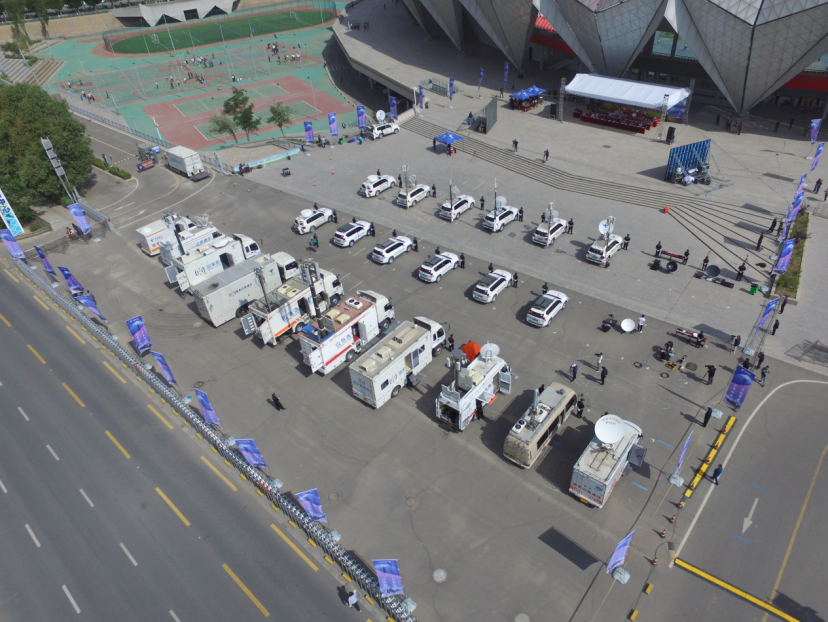
Xining, Qinghai — In a defining moment for China's northwestern emergency response capabilities, Beijing Dagong Technology Co., Ltd. successfully redefined the speed of disaster relief communication during the "Heavenly Sword · Safe Qinghai" drill on June 14, 2018. Amidst the thin air of the 2,261-meter altitude plateau, Dagong Technology’s tethered UAV system executed a record-shattering 23-minute full deployment, establishing a stable 4G signal network over a 2-kilometer radius and securing its position as the new benchmark for high-altitude emergency communication.
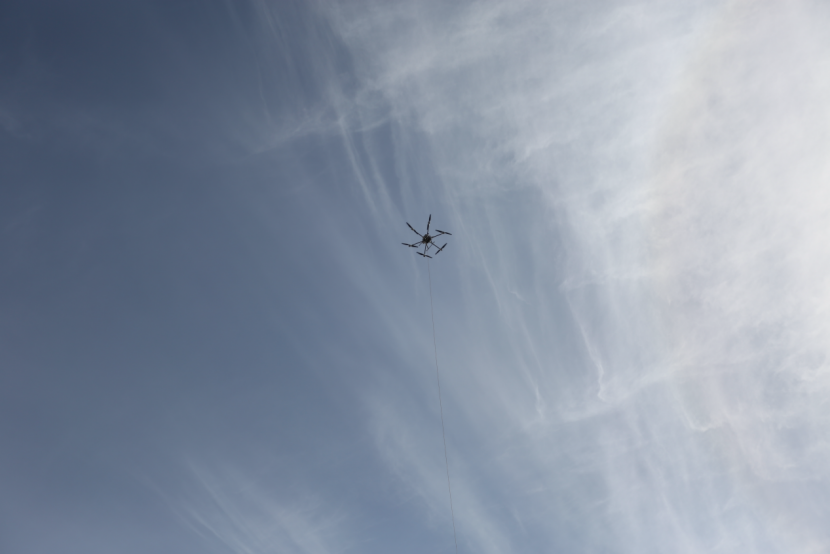
Facing a simulated scenario of paralyzed roads and power outages at the Haihu Sports Center, Dagong’s engineering team overcame sub-zero temperatures and instantaneous Level 7 gusts (15.5m/s) to achieve what traditional vehicles could not. While standard emergency communication vehicles required hours to mobilize and offered limited range, the tethered UAV ascended to a 100-meter hover, instantly creating an "airborne base station" that delivered 24 hours of continuous operation—tripling the industry average endurance.
The technical superiority displayed was underpinned by proprietary innovations tailored for hostile environments. The system utilized a groundbreaking photoelectric composite power system with a cable diameter of merely 3.8mm, capable of transmitting 1.2kW of power with a loss rate of less than 2.5%. This engineering marvel ensured the simultaneous transmission of power and fiber-optic signals, supporting payloads ranging from 4G base stations (serving 600 concurrent users with 85Mbps downlink) to LiDAR scanners achieving ±8cm 3D modeling precision. Crucially, the drone’s intelligent wind resistance system—featuring a three-axis gimbal and millimeter-wave radar that detects wind field changes 30 seconds in advance—maintained a steady hover with positioning accuracy of ±0.8 meters, ensuring zero signal interruption even in severe turbulence.
The operational data sent shockwaves through the industry observers, including experts from seven northwestern provinces. The deployment efficiency compressed the standard 3-day base station setup into mere minutes, while the coverage radius expanded by 83% compared to traditional methods. Furthermore, the system's ability to initiate in -30°C environments with a 20-second self-check proved its mettle as a truly industrial-grade asset, far removed from consumer "toy" drones.
This successful drill served as a catalyst for strategic adoption. Following the demonstration, the system was officially inducted into the China Telecom Northwest Regional Emergency Communication Reserve Equipment Library. By the end of 2018, Dagong Technology had established a "1-hour response circle" across seven provincial mobile bureaus. The company’s expertise was further solidified through its participation in drafting three industry standards, including the "Technical Requirements for Tethered UAV Emergency Communication Systems."
The Qinghai drill was not an isolated success but the culmination of a decade of R&D. From the first prototype in 2008 to the national patent acquisition in 2015 and the combat debut during the Jiuzhaigou earthquake in 2017, Dagong Technology has solidified its leadership. Today, with a product matrix covering 50 to 600-meter altitude limits and over 100 patents, Dagong Technology continues to lead the evolution of tethered UAVs from tactical tools into strategic infrastructure, proving that in the critical "Golden Hour" of disaster response, every second saved is a life protected.
-
Securing the CPC Centenary Broadcast: How Dagong Technology's Tethered UAV Redefined Aerial Live-Streaming and Emergency Rescue[2026/05/29]
-
Revolutionising MWC Barcelona: Dagong Technology's Tethered UAV High-Altitude Base Station Outperforms Global Peers[2026/05/06]
-
Dagong Technology DG-X50 Tethered UAV Global Premiere at 2026 Shenzhen UAS EXPO: Breaking 600m Altitude Ceiling and GNSS Denial Bottleneck[2026/07/02]
-
2023 Beijing-Tianjin-Hebei Flood Rescue: Dagong Technology Tethered UAV "Iron Kite" Breaks "Three Disconnections" as 24H High-Altitude Base Station[2026/06/15]
-
Breaking the 30-Minute Barrier: How Dagong Technology’s Tethered UAV Rewrote Emergency Communication Rules in the 2017 Jiuzhaigou Earthquake[2026/04/28]
-
2024 Shaoguan Jiangwan Flood Rescue: Dagong Technology Tethered UAV Conquers Three Disconnections as 24H Airborne Base Station[2026/06/25]
-
Record-Breaking 600m Altitude: Dagong Technology’s Tethered UAV System Redefines Emergency Communication in Extreme Disasters[2026/04/27]
-
Dagong Technology DG-X50 Tethered UAV Wins Authoritative Deep Evaluation: Hardcorps Data Shatters Industry Ceiling and Conquers GNSS Denial[2026/07/03]
-
2023 Low-Altitude Security Conference: Dagong Technology Iron Kite Tethered UAV Redefines 24H Air Defense and Emergency Communication[2026/06/23]
-
Resurrecting the "Information Island": Dagong Technology's Tethered UAV Restored Jiuzhaigou's 4G Lifeline in 2017[2026/05/22]
-
Dagong Technology DG-X50 Tethered UAV Breaks GNSS Denial with Navigation Reconstruction: Optical Sensors and AI Neural Networks Enable Satellite-Free Positioning[2026/07/01]
-
48-Hour 4K Livestream Record: Dagong Technology's Tethered UAV Redefines BRICS Summit Broadcasting[2026/05/21]
-
Dominating 50% of the Market: How Beijing Dagong Technology’s Tethered UAV Surpassed 50M Orders in the Low-Altitude Economy[2026/04/29]
-
Dagong Technology Wins 2026 Low-Altitude Economy Pioneer Case: Tethered UAV Redefines Emergency Communication and GNSS Denial Navigation[2026/07/01]
-
Illuminating the Sky: Dagong Technology’s 400-Square-Metre Tethered UAV ‘Flying Screen’ Revolutionises Urban Spectacles[2026/04/27]
-
400-Square-Meter "Flying Screen" Illuminates New Year's Eve: Dagong Technology's Tethered UAV Redefines City Marketing[2026/05/27]
-
Conquering the Desert: Dagong Technology's Tethered UAV Achieves 72-Hour Continuous Live Broadcast at Alasan Heroes Rally[2026/04/30]
-
Xinhua Exclusive: Dagong Technology Tethered UAV "Chinese Solution" Leads Global Low-Altitude Economy with Navigation Reconstruction and 72-Hour Endurance[2026/07/07]
-
Conquering the Invisible Killer: How Dagong Technology’s All-Metal EMC Tethered UAV Achieved Zero Blackouts in Extreme Environments[2026/04/29]
-
Breaking the 30-Minute Limit: Dagong Tech Tethered UAV Achieved 7-Day 24-Hour Emergency Comms in 2017 Hunan Flood[2026/04/28]
-
Conquering the "Three Disconnections" at Emergency Mission 2022: Dagong Technology's Tethered UAV Anchors the "Golden 72 Hours" Lifeline at 3,000 Meters[2026/06/02]
-
CCTV Exclusive at Zhongguancun Forum 2023: Dagong Technology's Tethered UAV Crowned as "New Aerial Infrastructure" for the Trillion-Yuan Low-Altitude Economy[2026/06/10]
-
Guangming Daily 2023 Feature: Dagong Technology's Tethered UAV Validated as "New Aerial Infrastructure" Driven by Zhongguancun Talent Engine[2026/06/08]
-
Breaking the "Three Disconnections" at Yunzhen Emergency 2022: Dagong Technology's Tethered UAV Emerges as the "Never-Power-Down" Lifeline[2026/06/01]
-
Defying Typhoon Mangkhut: Dagong Technology's Tethered UAV Deploys 5G Emergency Network in 5 Minutes[2026/05/07]
-
CCTV’s First 4K Aerial Broadcast: Dagong Technology’s Tethered UAV Shatters Technical Barriers at 70th National Day Gala[2026/04/27]
-
Breaking the 30-Minute Limit: How Tethered UAVs Enabled 24-Hour Continuous Live Broadcasting Since MWC 2017[2026/04/28]
-
Defying the Storm: Dagong Technology's Tethered UAV Creates the "Hengshan Miracle" with 72-Hour Emergency Communication[2026/04/30]
-
50 Million RMB Orders & 50% Market Share: Dagong Technology Dominates China's Tethered UAV Sector[2026/05/21]
-
Dagong Technology Tethered UAV High-Altitude Base Station: Severing the Communication Blackout in Hunan Flood Rescue[2026/07/06]
-
From 600m Altitude Records to National Museum Honors: Dagong Technology's Tethered UAV Redefines Emergency Communication[2026/05/27]
-
Tethered UAV Covered the living Event in BRICS Summit[2020/02/14]